The Translations Panel

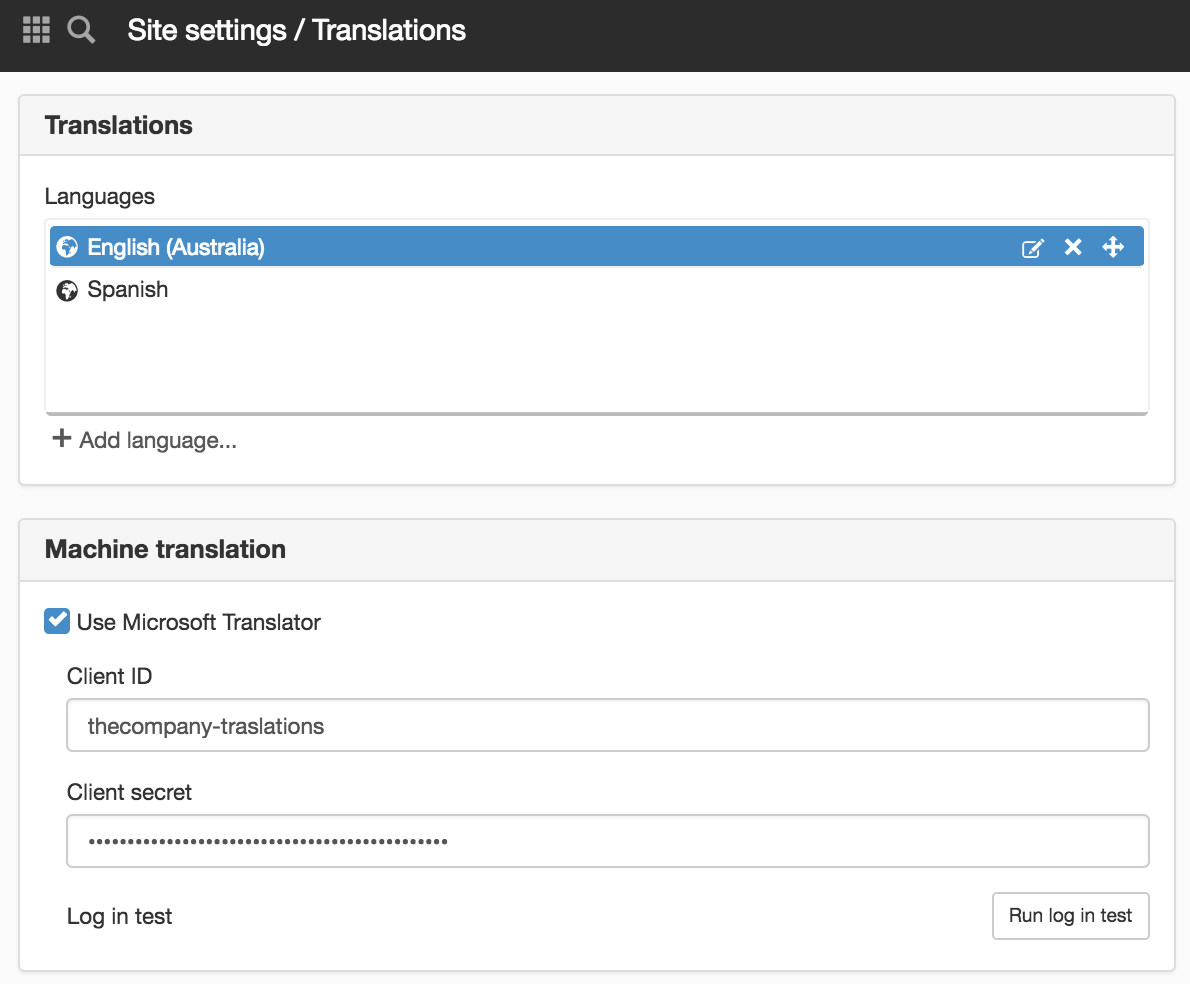
In the Translations panel, you can set the languages you want to translate into on this website. You can also set up a Microsoft Translator account if you want to automatically translate pages. Another option is to translate the text on the page using DeepL.

Translations

Language

Lists the languages that are used for translation on the website. Click the Add language link to add a language that you intend to translate to on your website. These languages will appear in a list when the editor selects the Translationoption.

If you do not have a language selected in the list, there are no links between translated pages!

Marking for search engines

Enable ‘hreflang’ to notify search engines about translations

In Sitevision, we have always printed hreflang on translated pages. From now on, you can choose whether or not to enable this. By default, this box is checked.

Activate ‘x-default’ to notify search engines about the default language

This setting is recommended by Google for handling pages where no language matches. This means you set a default language. If you tick this box, two additional options will appear:

  • Use default language on the home page - tick this box if you have a home page with lots of language options (for example, a home page with lots of links to different countries). Select a language from the list.
  • Use default language on translated pages - Default language for translated pages only means that the language you have set under Website settings -> Translations should be available as an hreflang (x-default) on a translation that includes that language. Select a language from the list.

The language of the pages and the standard language you set up must match completely, and the country code must also be the same for x-default to be printed.

Machine translation

Here you can choose whether you want to use machine translation and, if so, which service you want to use.

No machine translation

If you do not want to use machine translation, select this option. No machine translation settings will be displayed.

Use Microsoft Translator

Tick this box for automatic translation of a page with Microsoft Translator.

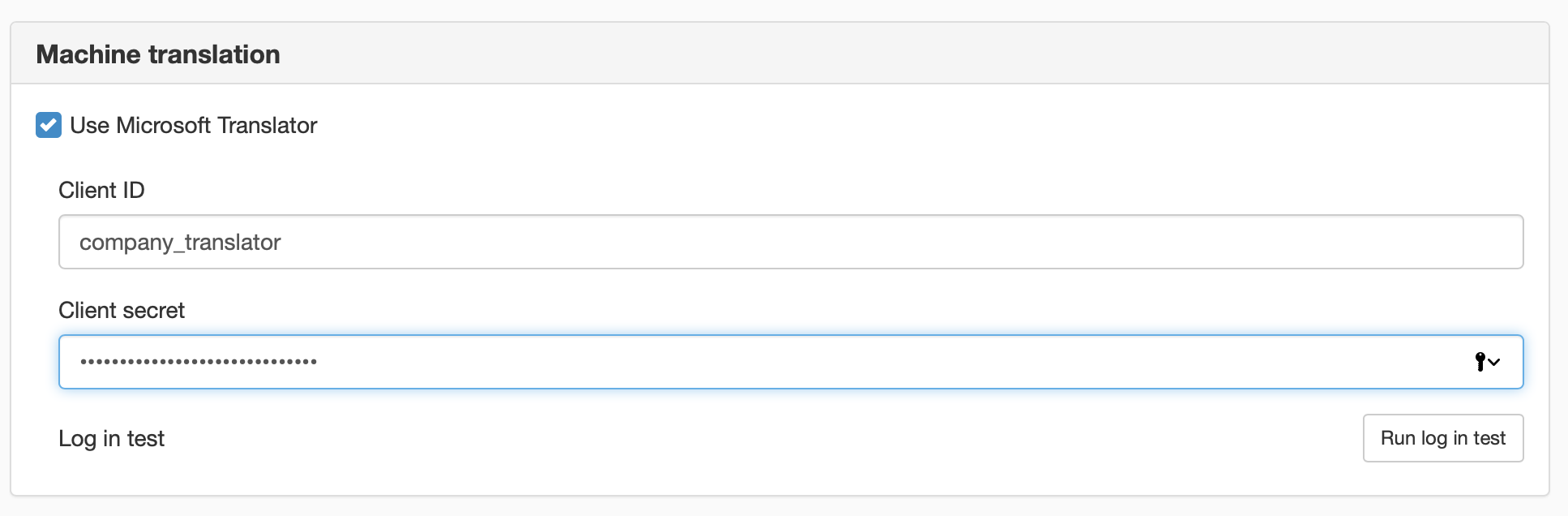
Client ID

Enter the account name you selected during application registration

Client secret

Paste the key you received from Microsoft.

Run log in test

Click this button after entering your details to obtain confirmation that they are correct.
Test success

Use DeepL Translator

Another option is to translate the text on the page using DeepL

To create a licence key, go to the API section of the website. You can create your account on the DeepL API page. The function is available in a limited free version and various levels of paid versions. Integration of the module enables translations of text modules directly via right-click in the module. You can also add pages to a publishing project and translate all pages directly.

Use Deep L API Pro

To ensure compliance with the General Data Protection Regulation (‘GDPR’), we recommend using a DeepL Pro account. This ensures that text is not stored on their servers. Read more about DeepL's personal data processing on their website

Use DeepL glossaries

You can also choose to use a customised glossary. It can be useful to create glossaries containing specific terminology, which is particularly useful for technical documents, legal texts or marketing materials.

Glossaries can also be used when translating a publishing project.

You can only use one glossary per project. In the API calls to DeepL, you can specify which glossary you want to use for the translation.

In the website settings, there is an option to activate glossaries and also update them.

  • Automatic application: Once a term glossary has been created and activated, DeepL will automatically apply these terms in translations, reducing the need for manual adjustments.
  • Multiple languages: Glossaries can be created for multiple language pairs, making it possible to manage and use specific terms in different languages.

The page published:

Did the information help you?

help.sitevision.se always refers to the latest version of Sitevision